Simien Mountains National Park
Safari suitability: 8/10
Find your tourStunning scenery and endemic geladas make this park the jewel in Ethiopia's crown.
Highlights
- Geladas, Walia ibex, Ethiopian wolves, trekking and mountain scenery
- Elevation ranges from 1,900–4,543 m (6,234–14,905 ft)
- Stunning views of Ras Dejen. At 4,543 m, it is the highest mountain in Ethiopia and the highest peak in the Horn of Africa.
- A modest hike to Jinbar Waterfall is well worth it.
About Simien Mountains National Park
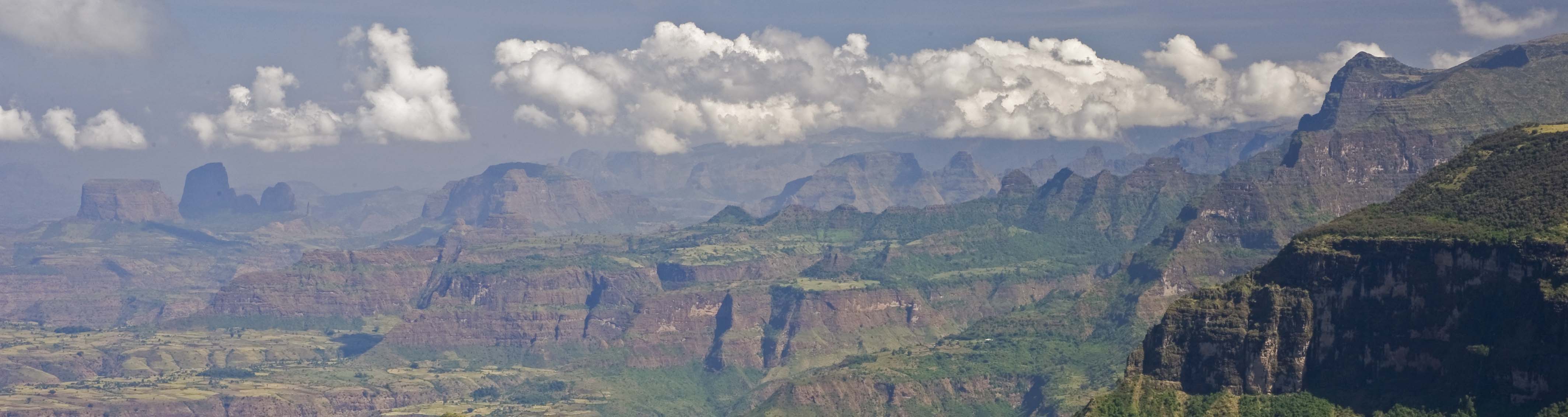
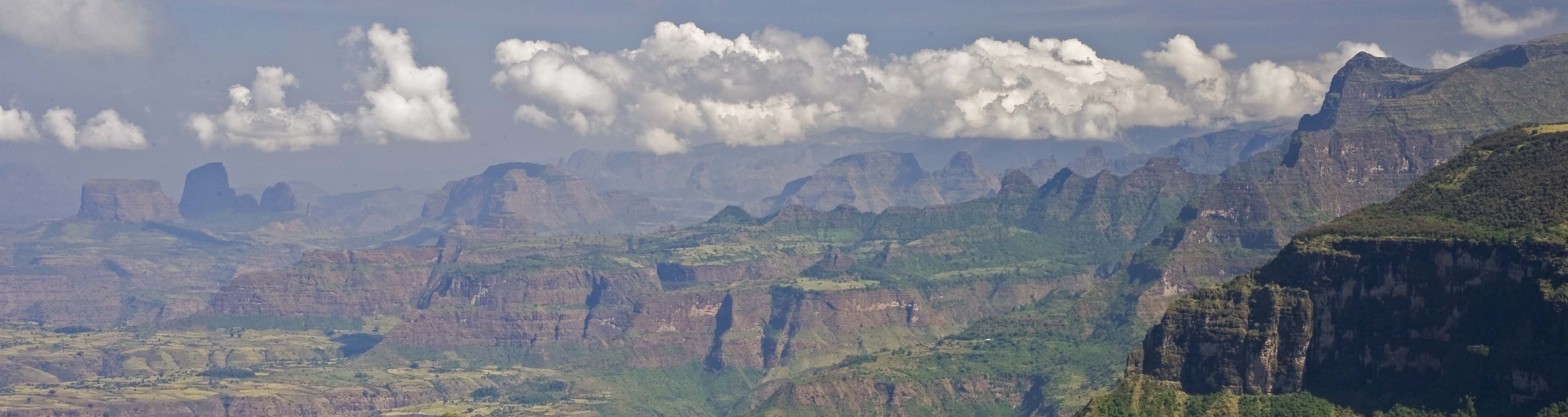
Simien Mountains National Park protects one of the most distinctive landscapes in Africa. Located in Ethiopia's northern highlands, the park is a land of deep valleys, sheer cliffs, rugged peaks, and high plateaus formed by volcanic activity and millions of years of erosion. In places, the escarpments fall more than 1,000 m into the valleys below. Established in 1969, the park originally covered 136 km². Its boundaries were revised in 2003, expanding the protected area to include the Mesarerya and Lemalimo wildlife reserves and increasing its size to 412 km². Simien Mountains National Park became a UNESCO World Heritage Site in 1978 in recognition of its exceptional scenery and unique wildlife. While some areas can be explored by vehicle, the best way to experience the park is on foot. Walking trails connect viewpoints, campsites, wildlife areas, and mountain passes across the highlands.
Simien wildlife
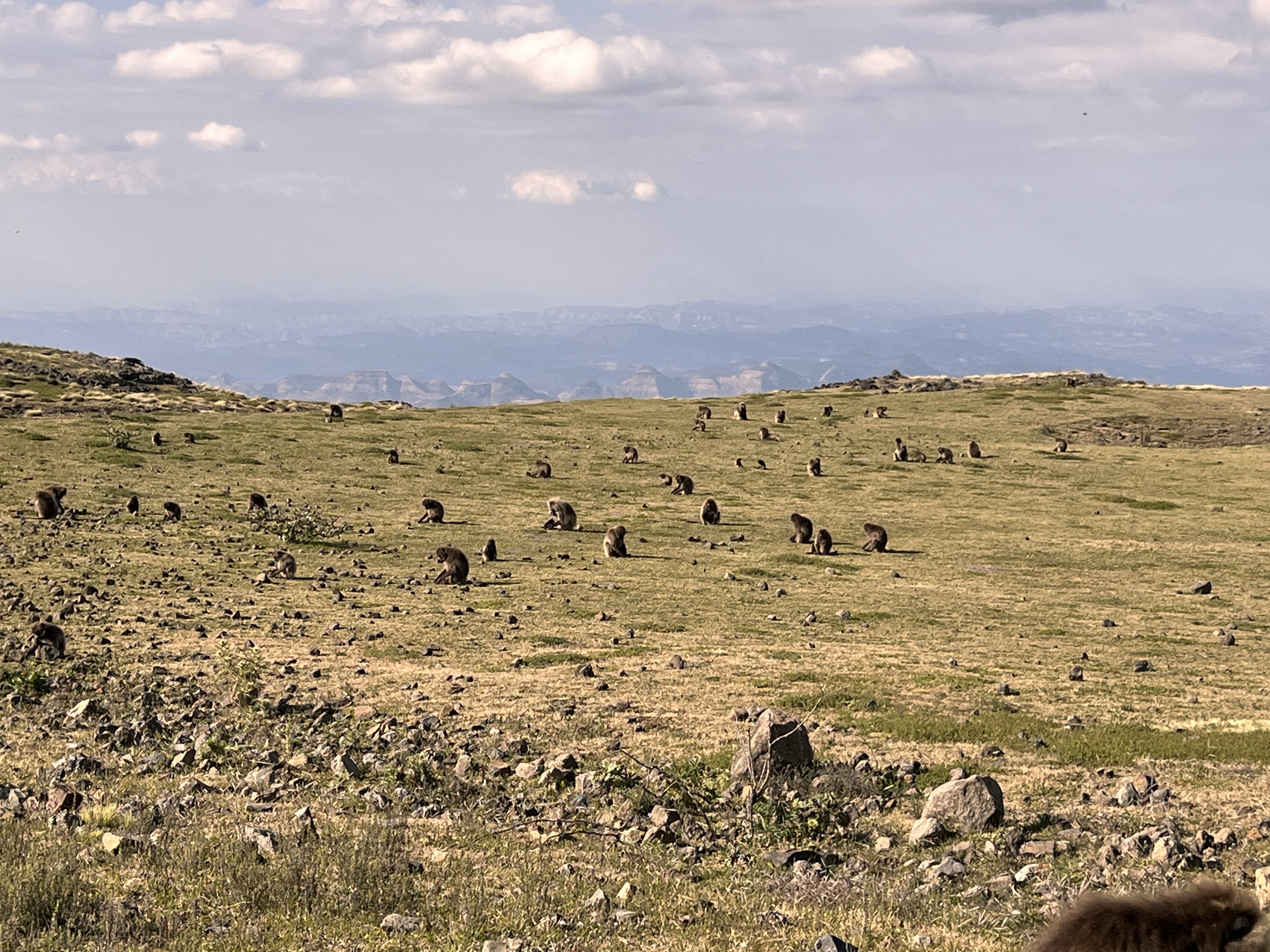
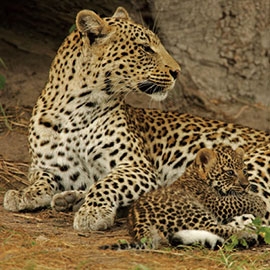
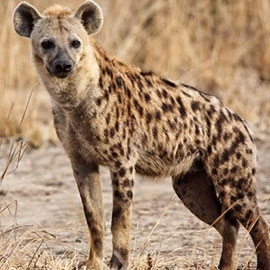
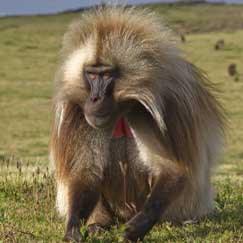
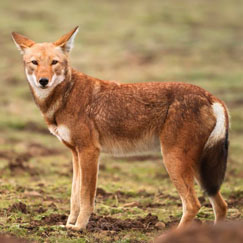
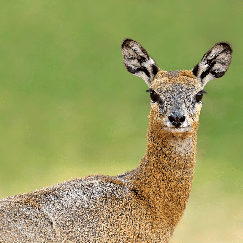
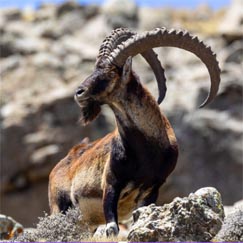
Simien Mountains National Park is home to more than 36 mammal species, including several found only in Ethiopia. Geladas are the animals most commonly encountered. Large troops graze across the grasslands and plateaus, often feeding close to walking trails. Recognizable by the bare patch of red skin on their chest, they are sometimes called the “bleeding heart”monkey. Although frequently mistaken for baboons, geladas belong to their own genus and are found only in the Ethiopian Highlands. The Walia ibex is another of the park's signature species. Found nowhere else in the world, this wild mountain goat inhabits steep cliffs and rocky escarpments. Conservation efforts within the park have helped the population recover from historic declines caused by hunting and habitat pressure. The Ethiopian wolf is found in the higher-altitude grasslands. It is the world's rarest canid and one of Africa's most endangered carnivores. Disease, habitat loss, and declining habitat quality continue to threaten the species. Other mammals seen in the park include klipspringer, bushbuck, golden jackal, spotted hyena, leopard, serval, caracal, and black-and-white colobus monkey.
Simien birdlife
With more than 180 recorded bird species, Simien Mountains National Park is one of Ethiopia's premier birdwatching destinations. The park's cliffs, escarpments, grasslands, and high-altitude habitats support a diverse range of resident and endemic species. Notable birds include the bearded vulture, thick billed raven, wattled ibis, Abyssinian catbird, Verreaux's eagle, and augur buzzard. The bearded vulture, also known as the lammergeier, is one of the park's most iconic birds. With a wingspan of up to 2.8 m, it is frequently seen gliding along the cliffs and riding air currents above the valleys. Unlike most vultures, it feeds largely on bone marrow and is known for dropping large bones onto rocks to break them open. Its size, distinctive appearance, and regular presence around the escarpments make it one of the highlights of birdwatching in the Simien Mountains
Landscapes and scenery
The landscape is the defining feature of Simien Mountains National Park. Millions of years of erosion carved the Ethiopian plateau into deep gorges, sharp ridges, towering cliffs, and isolated peaks. UNESCO has described the area as one of the most spectacular mountain landscapes in the world. Ras Dejen, at 4,543 m, is the highest mountain in Ethiopia and the highest peak in the Horn of Africa. The Simien Mountains also form one of Africa's largest highland areas above 3,000 m, and are one of the few places in tropical Africa where visitors might encounter snow. Some of the park's most impressive viewpoints include Imet Gogo and Gidir Got, which offer sweeping views across the escarpment and surrounding lowlands, and are popular stops for visitors on multi day treks. The Jinbar Waterfall is another notable feature, plunging into a deep gorge below the plateau. Vegetation changes with altitude. The high plateaus, generally above 3,600 m, are covered with grasses, giant heath, and giant lobelia, a striking plant unique to these highlands, while lower elevations support a wider variety of shrubs, Erica forest, and woodland vegetation. The park contains numerous plant species found only in Ethiopia.
Popular Simian Mountain activities
Trekking is the main activity in Simien Mountains National Park. Routes range from short walks near Sankaber to extended treks through Geech, Chennek, Bwahit Pass, and Ras Dejen. Trips can last from a single day to more than a week, depending on the route. Wildlife viewing is often combined with trekking. Geladas are frequently seen throughout the park, while Walia ibex are most commonly observed around Chennek. Ethiopian wolves are occasionally encountered in the higher grasslands. Birdwatching is rewarding year-round, particularly along the escarpments, where large raptors take advantage of rising air currents. The park's varied habitats support both endemic highland species and a wide range of birds of prey. Photography is popular throughout the park. From gelada troops feeding on open grasslands to Walia ibex standing on cliff faces and panoramic views across the escarpment, the Simien Mountains offer outstanding opportunities for landscape and wildlife photography. Camping is an important part of the Simien experience. A network of campsites allows access to remote sections of the park that cannot easily be visited on day trips. Cultural experiences provide insight into life in the Ethiopian Highlands. Communities have lived and farmed these mountains for generations, adapting to steep slopes and high elevations. Barley is one of the region's most important crops and is a defining feature of the landscape. Along many trekking routes, fields of barley cover the plateaus and mountain slopes before giving way to grasslands and cliffs. Traditional farming remains an important part of daily life, and the mixture of farmland, grazing areas, and settlements adds another dimension to the mountain scenery.
Best time to visit the Simien Mountains
The dry season from October to May is generally considered the best time to visit. Conditions are usually more favorable for trekking, visibility is often better, and wildlife is easier to observe. Temperatures vary considerably with altitude. Days are generally mild, while nights can be cold, particularly at higher elevations. Accommodation Accommodation includes lodges, guesthouses, and campsites in and around the park. Simien Lodge is the most popular property in the area and occupies a strategic position near the escarpment. Many trekkers combine lodge stays with camping, particularly on longer routes that cross several sections of the park. Why Visit Simien Mountains National Park? Simien Mountains National Park is one of the few places in Africa where the landscape itself is the main attraction. Vast escarpments, deep gorges, jagged peaks, and high-altitude plateaus create scenery that differs completely from the savannas and plains more commonly associated with African travel. The combination of rare wildlife, extensive trekking routes, traditional highland communities, and some of the continent's most dramatic mountain views makes the Simien Mountains a destination that stands apart from any other national park in Ethiopia.
Simien Mountains National Park is most easily reached by a domestic flight from Addis Ababa Bole International Airport to Gondar Airport. From Gondar, it is approximately 100 km by road to Debark, where the park headquarters are located. Permits, guides, and scouts are arranged in Debark before entering the park.
Simien Mountains map
Nearby parks and game reserves
Latest photos