Gelada
Theropithecus gelada
The gelada is a species of monkey endemic to the Ethiopian highlands.
Behavior and diet
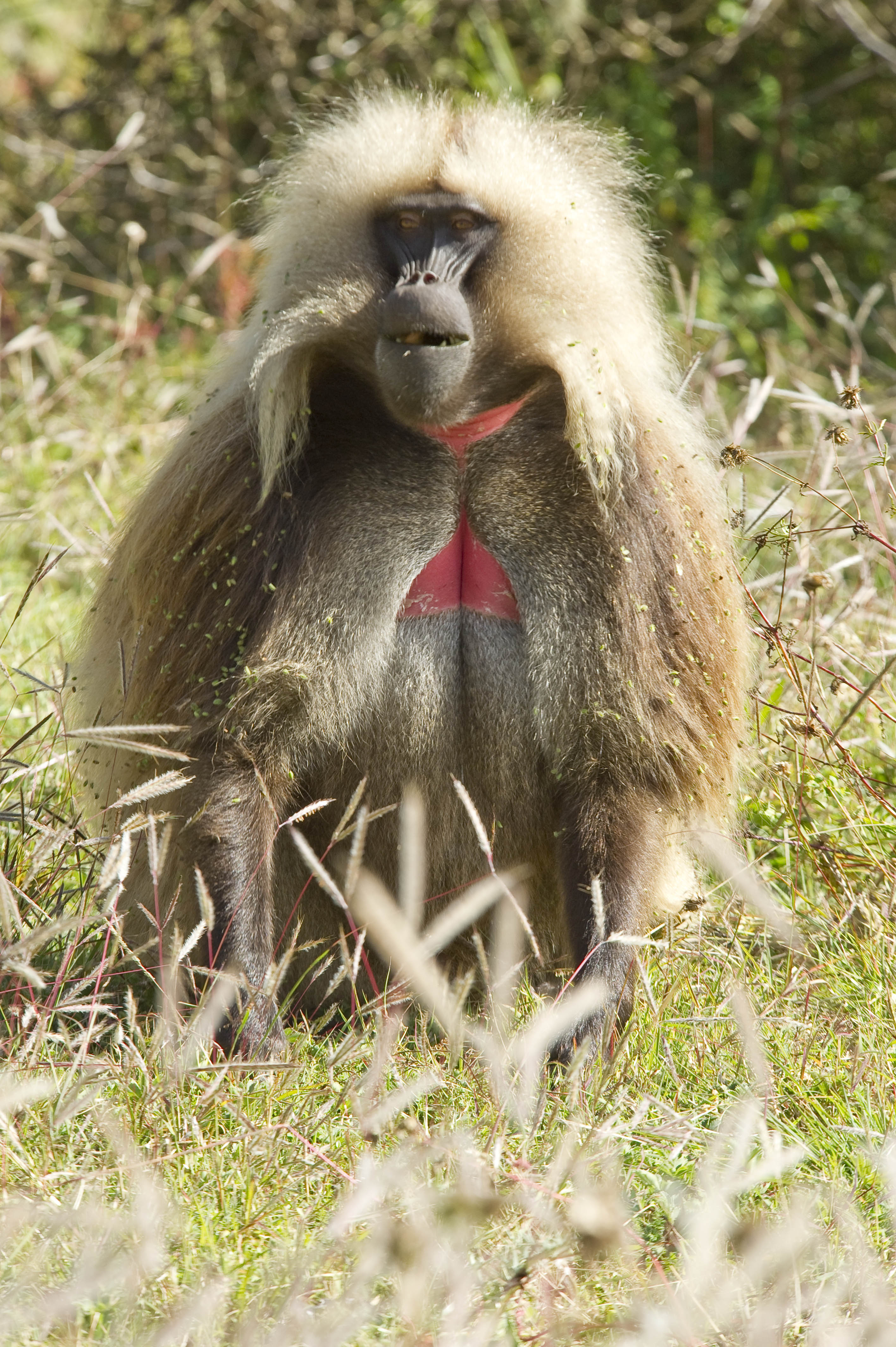
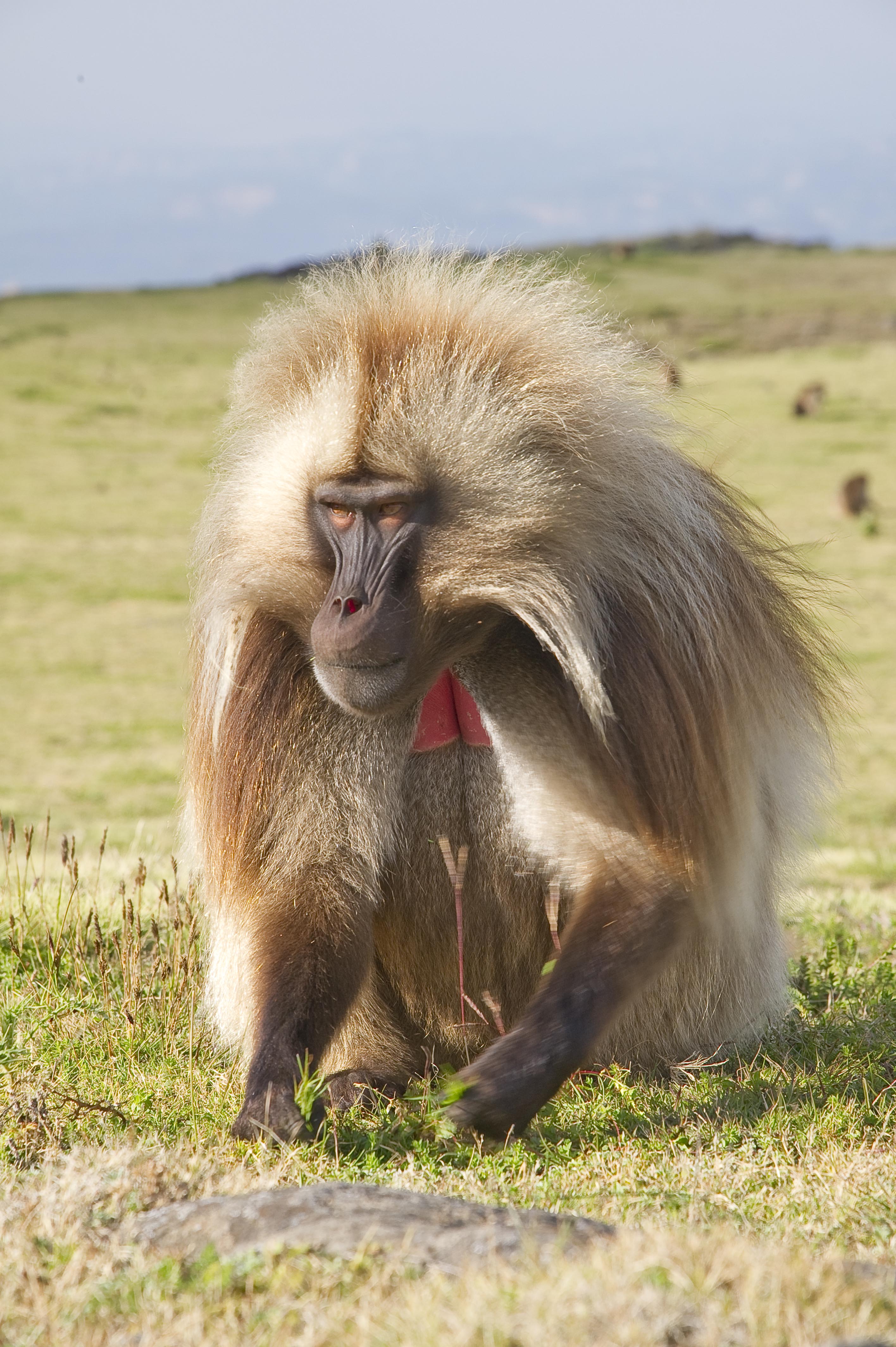
The gelada is often referred to as the gelada baboon, bleeding-heart baboon or gelada monkey. Although their faces resemble those of baboons, the gelada is not a baboon and is actually a species of old world monkey. The name gelada, loosely translates to ‘ugly’ in Amharic and it was adopted by Rüppell, a German naturalist, to describe the gelada. The name also is Arabic for ‘mane’, referencing the lion-like mane appearance in male geladas. Gelada has a hairless face with a short flatter muzzle than that of a baboon. It is covered with dark-brown coarse hair with a dark face and pale eyelids. Unlike the females, adult male geladas have a long heavy cape of hair on their backs.
Gelada habitat and diet
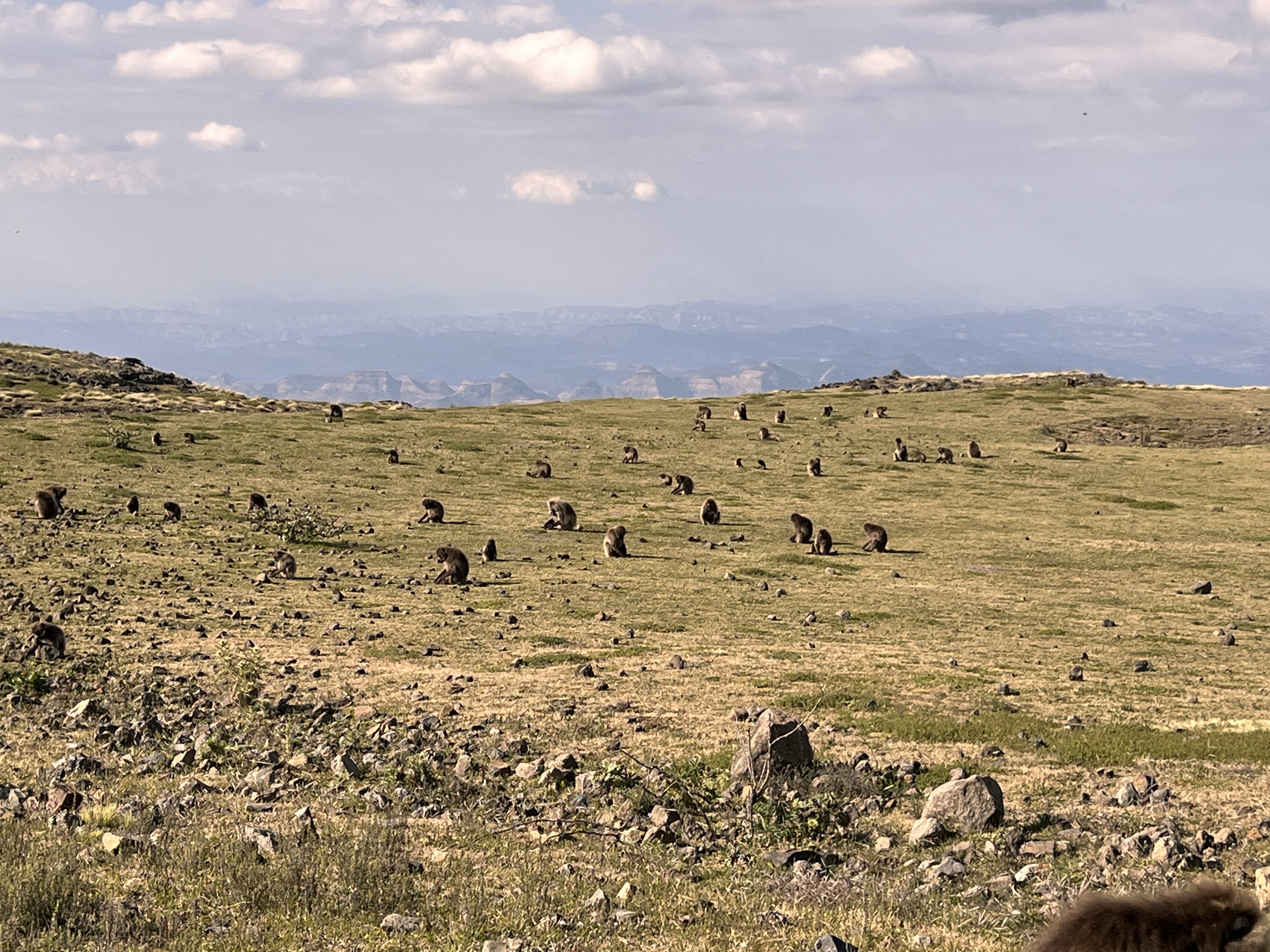
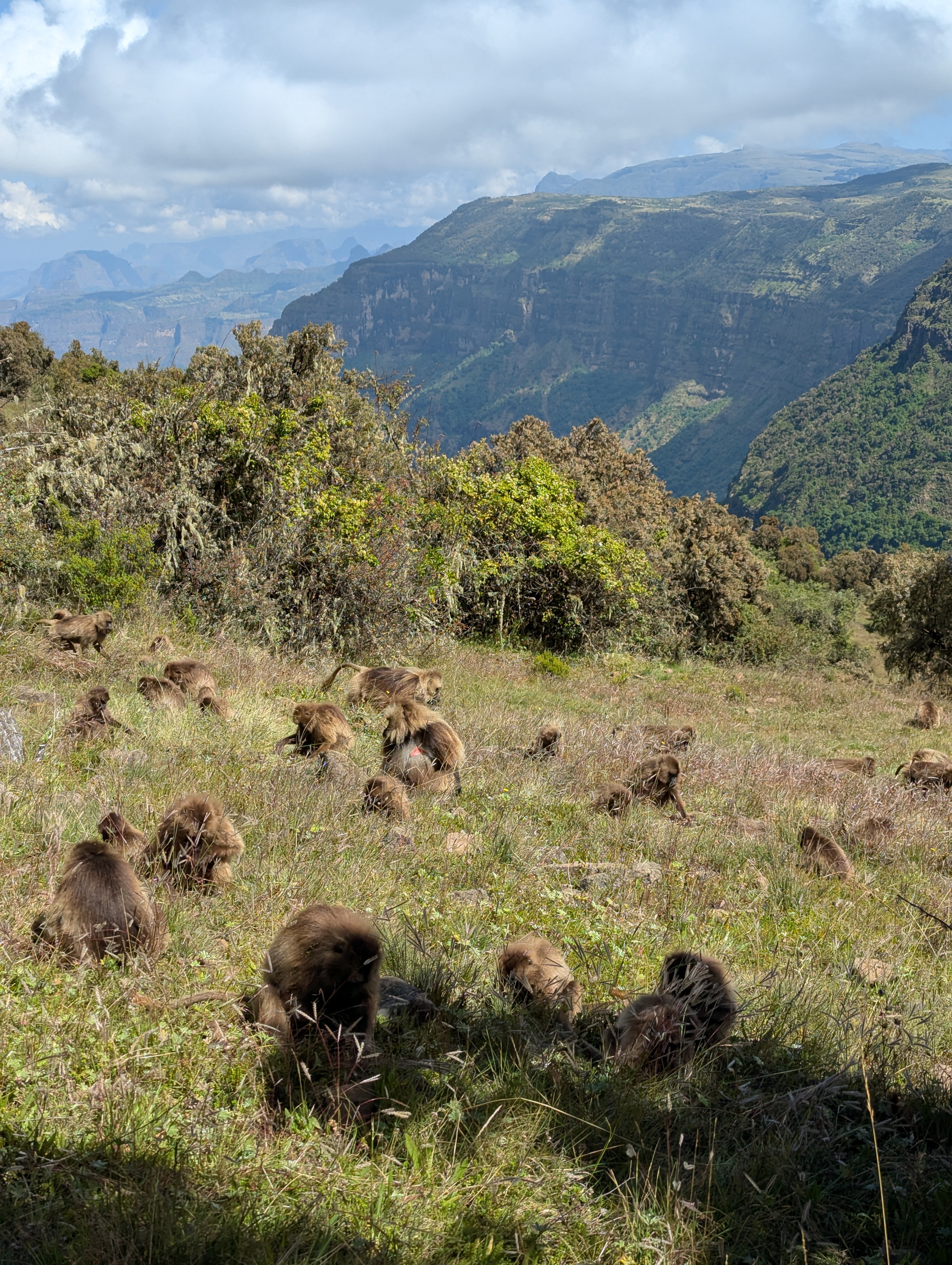
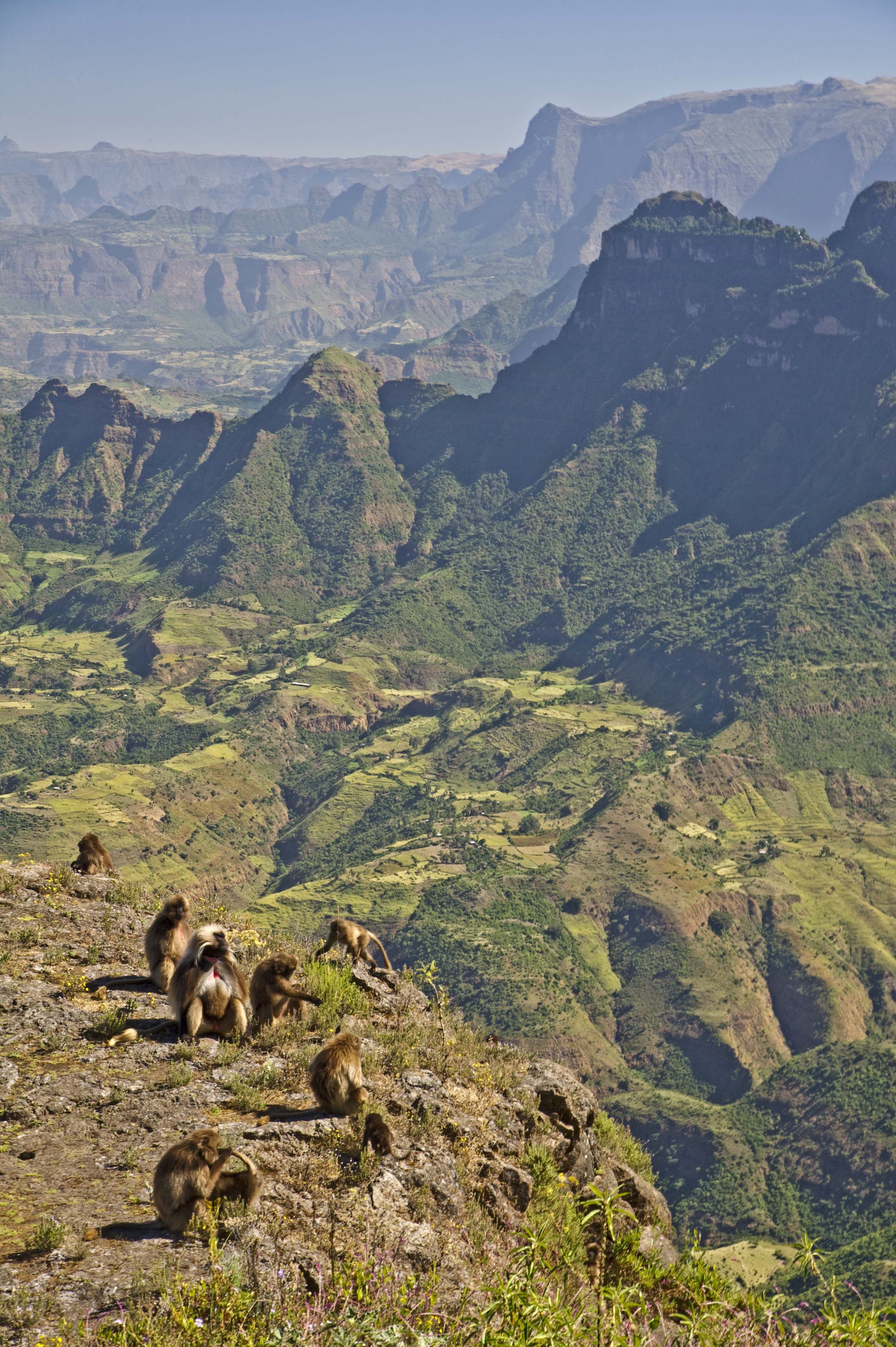
Geladas are found nowhere else on Earth but the Ethiopian Highlands, where they live among sweeping alpine grasslands and dramatic rocky cliffs at elevations of roughly 1,800 to 4,400 meters. At night, they retreat to steep cliff faces for safety, emerging by day to forage across open meadows scattered with shrubs, thickets, and occasional trees.
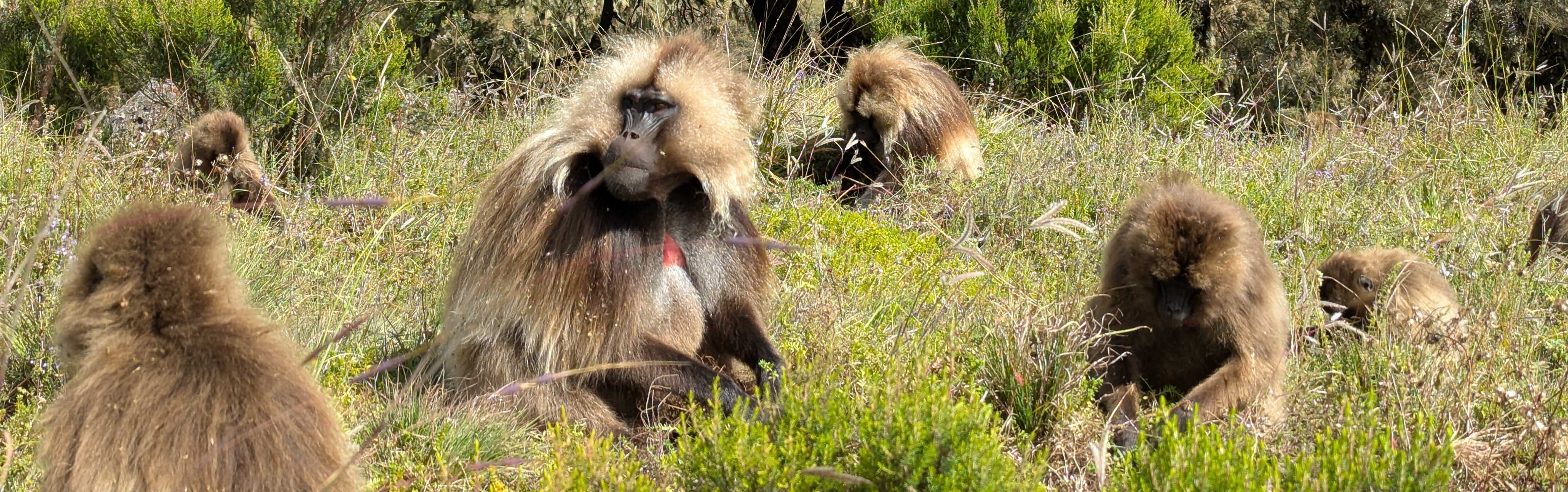
Grass dominates their diet, making up about 90 percent of what they eat. They feed on both the blades and seeds, showing a preference for seeds when they are available, and will also dig for roots and rhizomes or nibble on flowers. Although largely herbivorous, geladas occasionally eat insects as well. Their grazing style is especially unusual for a primate: they spend much of the day cropping and chewing grass in a manner more reminiscent of zebras and other grazing mammals.
Gelada physical traits
Geladas are medium-sized primates covered in thick brown fur, with adults typically weighing between 26 and 45 pounds, although some males can reach about 65 pounds. One of their most distinctive features is the bare, reddish patch of skin on the chest, which is present in both males and females and often described as heart-shaped and is often referred to as the ‘bleeding heart’. This patch changes color to bright red and develops fluid-filled vesicles in females to signal receptivity during mating season. Additionally, they have small sturdy fingers adapted for pulling grass and narrow, small incisors for chewing.Unlike many monkeys, geladas have a non-prehensile tail, meaning it cannot be used to grasp branches or objects. In the wild, they can live for around 14 years. Females have a reproductive cycle lasting a little over a month, and pregnancy lasts approximately six months before a single infant is usually born.
Gelada mannerisms
The gelada has distinctive mannerisms and numerous adaptations for its lifestyle. Its unique gait enables it to squat bipedally and move by sliding its feet without changing posture. This posture is one of their most distinctive mannerisms, giving them a human-like way of covering ground. When threatened, male geladas perform a lip-flip; curling their upper lip back to reveal red gums and sharp canines. Combining this with a direct stare and raised eyelids, this visual warning diffuses conflict without requiring physical confrontation. They have a complex vocal repertoire that entails lip smacking rhythm mimicking human speech. This is portrayed when they are grazing in herds and tall grass obscures visual contact; the rhythmic chatter helps them maintain social cohesion. Largely terrestrial, it spends most of its time foraging on grasslands. They are active during the day, especially in the mornings and sleep at night on rocky cliff outcrops away from their predators; hyenas and leopards.
Gelada social structure
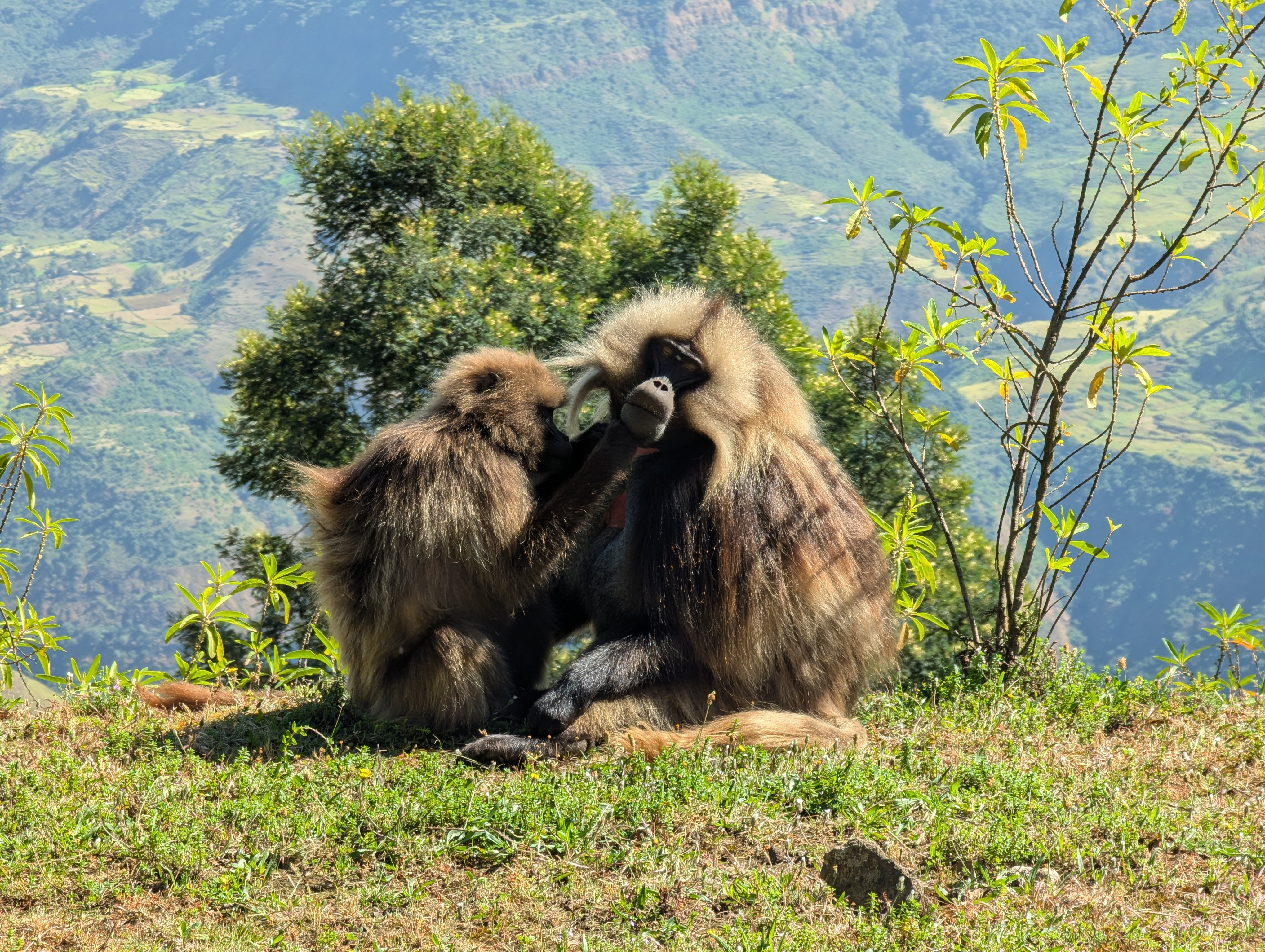
Geladas live in small family groups known as harems, typically made up of one adult male, several related females, and their offspring. Females hold much of the social power within these groups and can even support a younger male taking over as leader. Multiple harems often gather together in much larger communities called troops or bands, sometimes numbering anywhere from 30 to 600 geladas. With an unusually broad range of vocalizations for a primate, these large gatherings can become remarkably loud.
Geladas are polygynous and they tend to mate at any time of the year. However, many births have been recorded during the rainy season. Their gestation period lasts 5-6 months, yielding a single baby. The Gelada population consists of a total of 200,000 individuals and the International Union for Conservation of Nature (IUCN) classifies them as a species of least concern. Habitat destruction for agriculture is the leading threat to the Gelada population. As a result, there is a potential risk for human-wildlife conflict due to their crop-raiding behavior; thus, they are shot and killed.
Did you know?
- Geladas are primarily diurnal and tend to be more active in the earlier hours of the day.
- The natural range of the species is restricted to Ethiopia’s Simien Mountains National Park.
- Gelada is the only primate that grazes by sitting on the ground while pulling grass with its hands.
- The red chest patch symbolizes sexual maturity in male Geladas while in females, it changes color during the peak reproductive cycle
- Their scientific name comes from two Greek words. Ther, meaning wild animal, and pithēkos, meaning ape.
- Spending almost all of their time on the ground, geladas are the world’s most terrestrial primates — with the exception of humans.
 Ethiopia