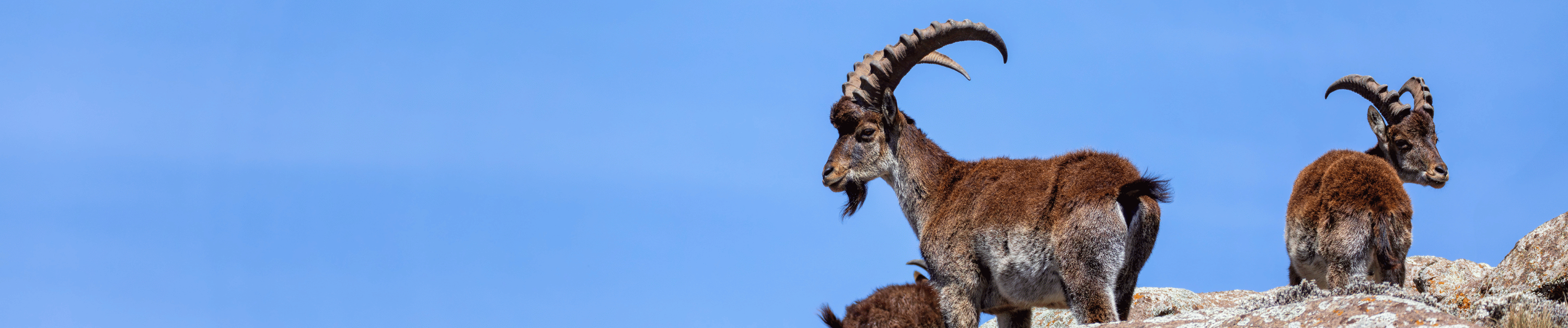
Walia ibex
Capra walie
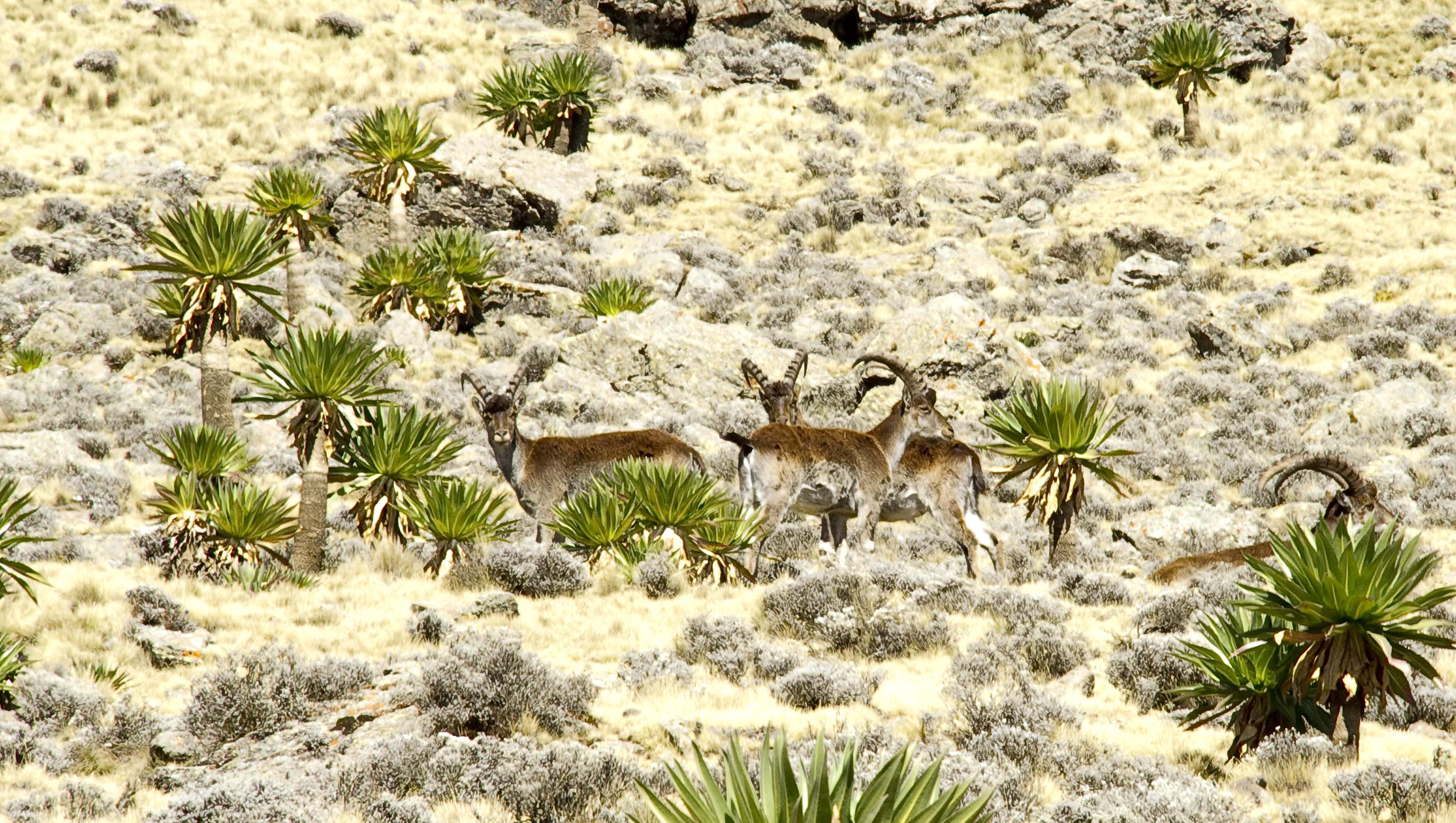
Walia live along steep escarpments and rocky mountain slopes, often at elevations above 3,000 meters, where their powerful legs and specialized hooves help them negotiate terrain that would be treacherous for most large mammals.
Behavior and diet
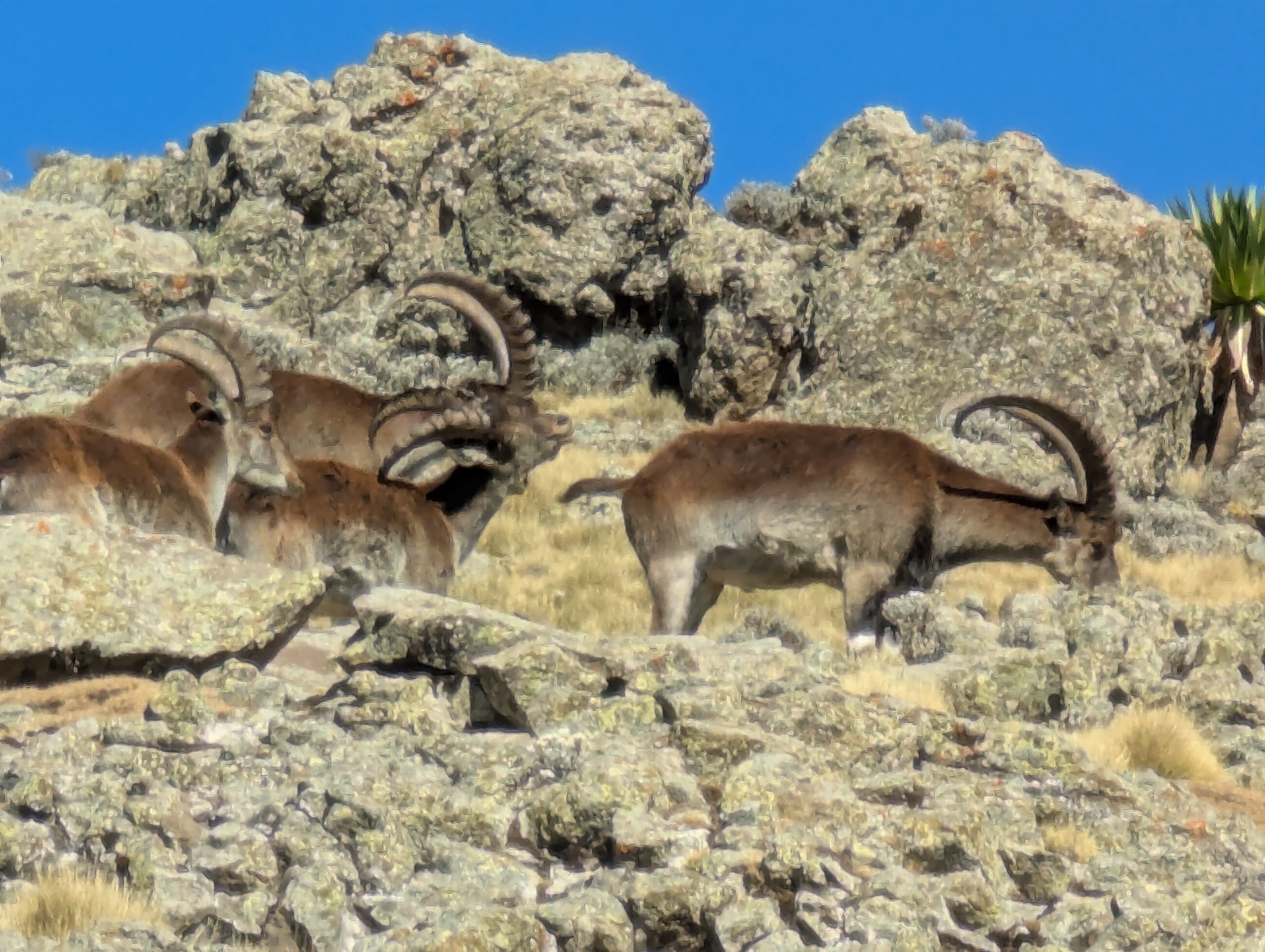
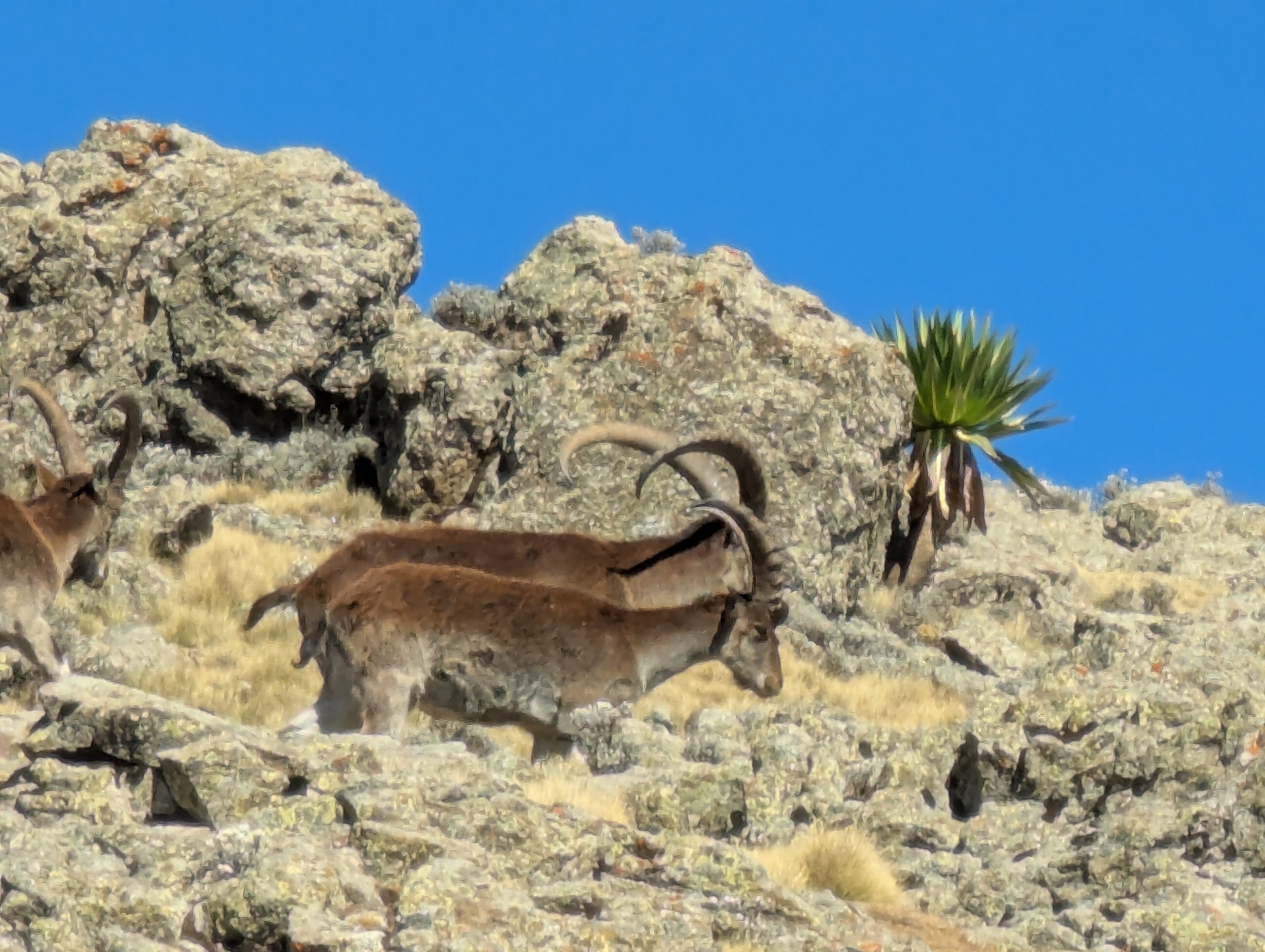
The Walia ibex is a rare goat species endemic to northern Ethiopia, whose entire population is limited to Simien Mountains National Park. Its name is derived from the Amharic word walya/walia, which means mountain or highland. The Walia ibex is chocolate-brown in color with light grey coloration on the fur around the muzzle and eyes. The underside and inside of its legs are white with black and white fur patterns stretching to its legs. It is distinctively characterized by long curving horns growing to a length of one meter. The horns have knots and rings that are often used to tell the age of the individuals. Similarly, they have strong legs and hooves that have adapted to moving easily on steep slopes and rocky cliffs. The males are larger in size than the females, with females having slightly arched slender horns.
The Walia is a grazer and a browser; foraging on grass, herbs, shrubs, and mountain vegetation. They are mainly active during early mornings and late evenings. Walia ibex female species tend to be solitary compared to male species outside of the mating season. This is reversed during mating season as females form nursery groups as male isolate to compete for mates. Their breeding season is between March and May. After a gestation period lasting between 150-170 days, a female gives birth. Majority of offspring births are recorded in September and October.
While the Walia ibex population is increasing, it is still categorized as a vulnerable and critically endangered species by the International Union for Conservation of Nature (IUCN). They are hunted for meat and face constant habitat disruption due to human encroachment for settlement and cultivation. Their main predators include the hyena and foxes.
Did you know?
- Walia ibex horn growth forms annual ridges that are used to estimate their age
- A mature male’s horns can reach roughly 89–114 cm (35–45 in) long, with a basal circumference of about 27 cm (~11 in)
- It derives its name from the Amharic word walya/wali, which directly translates to 'mountain/highland '.
- Male and female Walia ibex species live separately and only come together during breeding season.
- Walia ibex are the world’s best mountain climbers due to their adaptation to rocky and steep cliff habitats.
 Ethiopia