Kilimanjaro Northern Circuit
9 days— Northern Circuit Route (8–10 Days): Highest Success Kilimanjaro Trek with Best Acclimatization
$1602-2670 USD
pp
Safari summary
The Northern Circuit Route is the longest and most comprehensive route on Mount Kilimanjaro, offering the highest summit success rates due to its exceptional acclimatization profile. Spanning 8 to 10 days, this route circles the remote northern slopes of the mountain, providing a quieter and more scenic trekking experience with significantly fewer crowds. Climbers benefit from a gradual ascent that allows the body to adjust effectively to altitude, reducing the risk of altitude sickness and improving overall comfort. With diverse landscapes ranging from lush rainforest to alpine desert and expansive summit views, the Northern Circuit Route is ideal for trekkers who prioritize success, scenery, and a less crowded Kilimanjaro climb.
About this tour
| Tour type | Custom, tailor-made, private | |
| Main focus | None | |
| Activity level | Strenuous activity | |
| Best months | All months | |
| Countries | ||
| Parks |
Fine details
Safari highlights
- Hiking | trekking
What’s included?
- All drinks
- Internal flights
- Meals
- Park fees
- Private vehicle and driver
What’s not included?
- Hot air balloons
- International flights
- Premium alcoholic beverages
- Spa treatments
- Tips and gratuities
- Visas
Itinerary
Day 1: The Northern Circuit Route
Initiate the expedition at Londorossi Gate ($2250\text{ m}$) with a controlled ascent through dense montane rainforest. This zone features high humidity, a thick canopy, and a trail of complex root networks and compacted earth. Regulate your respiratory rate immediately to avoid premature anaerobic exertion. Establish camp at Mti Mkubwa ($2820\text{ m}$) under a high forest canopy, where managing the damp floor is crucial.
Day2: Mti Mkubwa to Shira 1
Transition from the montane forest into the heather and moorland zone, tackling a significant, sustained incline that breaks through the treeline. The environment opens up to full exposure, featuring the first appearances of the prehistoric Dendrosenecio kilimanjari. The goal is to reach the edge of the Shira Plateau. Shira 1 Camp ) is situated on an ancient, eroded volcanic caldera, requiring robust wind-shielding for tents due to high-velocity katabatic winds descending from the Kibo massif.
Day 3: Shira 1 to Shira 2
Tackle a strategic, low-exertion traverse across the heart of the Shira Plateau. The route is deliberately flat to prevent premature physiological fatigue, guiding you through a landscape of strange, prehistoric flora. Shira 2 Camp ($3850\text{ m}$) serves as the logistical hub of the western approaches. Because the altitude is now significant, strict hydration protocols are enforced to combat the dry, thin air and rapid respiratory fluid loss.
Day 4: Shira 2 to Moir Hut
Move into the barren alpine desert zone toward Lava Tower . This intentional physiological stress test forces your heart and lungs to adapt to severe oxygen deprivation. After a mandatory lunch at the tower, tackle the "Big Drop" to Moir Hut for the critical recovery phase. By sleeping significantly lower than the day's peak elevation, you trigger the release of erythropoietin, accelerating the vital production of red blood cells.
Day 5: Moir Hut to Buffalo Camp
This is the defining stage of the Northern Circuit, where the route diverges from all southern traffic to circumnavigate the Kibo cone via the northern slopes. The terrain presents a long, undulating sequence of volcanic ridges, fractured rock, and dry valleys with high visual impact. Reach Buffalo Camp ($4020\text{ m}$), a remote site offering a clear line of sight to the Kenyan border. The solitude here is absolute, making it one of the most pristine and untouched environments on the mountain.
Day 6 : Buffalo Camp to Third Cave
Continue along the Pofu Ridge, a high-altitude traverse that maintains a consistent elevation around the 4,000-meter mark. This critical "consolidation" phase allows your previous physiological adaptation gains to solidify. The trail consists of loose scree and dust, demanding close attention to your gait to avoid unnecessary energy waste. Drop slightly to Third Cave Camp , tucked into the northern base of Kibo, where temperatures are notably lower due to less direct sunlight on the north face.
Day 7: Third Cave to School Hut
The ascent toward the Kibo saddle is stark, desert-like, and composed entirely of volcanic ash and loose rocks. As you approach School Hut ($4750\text{ m}$), the environment becomes increasingly desolate. At this final staging ground, the focus shifts entirely to thermal management and metabolic preservation. You will eat, hydrate, and attempt to sleep under the most extreme conditions yet, minimizing every movement to prepare for the summit.
Day 8: School Hut to Mweka
Depart at 23:30 for a near-vertical, grueling slog over unstable scree to Gilman’s Point ($5685\text{ m}$) in extreme cold. Once on the crater rim, traverse to Uhuru Peak ($5895\text{ m}$) to reach the rooftop of Africa. The descent is a massive 15-kilometer marathon back through the alpine desert, into the moorland, and down to the forest edge at Mweka Camp ($3100\text{ m}$). This high-impact day requires extreme musculoskeletal discipline to handle a descent notorious for knee and toe trauma.
Day 9:Mweka Camp to Gate
The final segment through the rainforest is a rapid descent. Oxygen saturation levels return to baseline. At Mweka Gate (1,640 m), you conclude the expedition.
Here are the latest 6 tours by Edel Safaris. See all 18 tours.
Kilimanjaro Trekk Rongai Route
Tour by: Edel Safaris
Countries:

Focus: None
Kilimanjaro via Marangu Route
Tour by: Edel Safaris
Countries:
Focus: None
Kilimanjaro Trekk via Umbwe
Tour by: Edel Safaris
Countries:
Focus: None
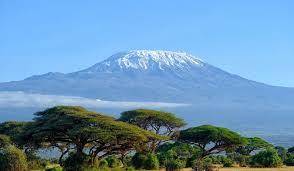
Kilimanjaro Trekk via Lemosho
Tour by: Edel Safaris
Countries:
Focus: None
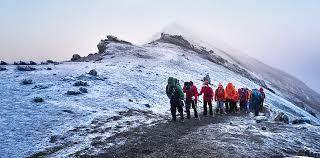
Kilimanjaro via Machame
Tour by: Edel Safaris
Countries:
Focus: None
Ten Day Serengeti & Zanzibar
Tour by: Edel Safaris
Countries:
Focus: Game drives